What We Do in the Shadows (2019–2024) 🧛♂️🦇
Hey look its freaking Matt Berry!
Let’s start by showing y’all the opening theme shall we? 🎬
Also here’s the season 1 trailer so any new comers can get an idea what this show is like.
⚠️ Content Warning:
This series contains strong language, graphic violence, gore, blood, decapitations, sexual humor, nudity, references to abuse and manipulation, and frequent dark comedy involving death and murder. It also includes scenes of body horror, supernatural creatures, emotional manipulation, toxic relationships, and themes of loneliness, identity, and existential depression hidden underneath the comedy.
Also fair warning: if you’ve ever worked retail, sat through a draining office meeting, or dealt with somebody who won’t stop talking at a family gathering… Colin Robinson may hit a little too close to home. 🫠
By the way, i’ve never watched the original movie.I know this is a spinoff of that, but I will be reviewing this as its own thing.
🩸 Non-Spoiler Plot Overview
For those who don’t know the show was basically a mockumentary of sorts and the plot of the show is, and I say plot very loosely.
What We Do in the Shadows is one of those shows where the premise sounds so simple that it almost sounds like it should have been a one-season joke. A mockumentary about vampires living together in Staten Island. That’s it. That is the pitch. Ancient blood-drinking creatures of the night, beings who have lived for centuries, who should be terrifying, elegant, mysterious, and powerful… and instead they are basically the worst roommates you could possibly imagine.
And somehow, this show takes that one idea and stretches it into six seasons without fully running it into the ground, which is honestly impressive because this could have gotten old very fast. But the reason it works is because the show doesn’t just go “haha vampires are dumb.” It commits to the world. It commits to the characters. It commits to the gothic horror aesthetic while constantly undercutting it with the most ridiculous modern-day nonsense possible.
This is a show where vampires can fly, hypnotize people, turn into bats, summon creatures, murder humans, and survive for centuries… but they cannot handle basic emotional conversations, modern technology, roommate drama, local politics, or literally any inconvenience that requires common sense.
That is where the comedy works best. It’s not just that they’re stupid. It’s that they are stupid while being dressed like gothic royalty.
The show is based on the 2014 film of the same name by Taika Waititi and Jemaine Clement, but the FX series very quickly becomes its own thing. It keeps the mockumentary style, keeps the deadpan humor, keeps the idea of supernatural creatures being socially awkward disasters, but the Staten Island crew becomes its own iconic little cursed family.
And yes, I do mean cursed family because honestly that’s what they are. Nandor, Laszlo, Nadja, Colin Robinson, and Guillermo are not just characters stuck together for jokes. Over time, the show slowly reveals that underneath all the blood, sex jokes, screaming, and stupidity, these characters are lonely. They are immortal, but they are emotionally frozen. They have lived forever, but they have not matured. They are ancient, powerful monsters, but mentally they are still just roommates who can’t communicate.
Which is probably the scariest thing in the whole show.
The art style and visual look of the show deserve a lot of credit too. This is not some cheap-looking comedy where the vampire stuff feels like costumes from a Halloween store. The show genuinely looks gothic. The house is dusty, dark, cluttered, creepy, and weirdly cozy. It feels like it smells like candles, old wood, blood, and centuries of bad decisions. The costumes are amazing. Nandor looks like an ancient warrior who accidentally ended up in a modern sitcom. Nadja looks like a gothic doll who would absolutely kill you for looking at her wrong. Laszlo looks like he escaped from a forbidden Victorian theater production. Colin Robinson looks painfully normal, which is the joke. And Guillermo starts off looking like the sweet, nervous assistant before slowly changing into someone with more confidence.
The humor style is also a huge reason the show works. This show throws everything at the wall. Deadpan humor. Dark humor. Improvised-feeling dialogue. Physical comedy. Awkward pauses. Mockumentary camera zooms. Random screaming. Supernatural nonsense. Casual murder treated like a minor inconvenience. And then, of course, Matt Berry saying literally anything in that voice.
The show’s humor is basically what happens when gothic horror, The Office, vampire lore, horny theater kid energy, and complete social stupidity all get shoved into the same coffin.
And somehow, it works.
🦇 Character Rundown
Nandor the Relentless (Kayvan Novak) is supposed to be the leader of the house, but calling Nandor a leader is honestly generous. This man was once a terrifying warrior and conqueror, and now he mostly acts like a confused immortal divorced dad trying to understand basic emotions. What makes Nandor funny is that he takes himself so seriously. He speaks like he is about to declare war on a kingdom, but half the time he is upset because Guillermo didn’t give him enough attention or because modern life is confusing. Kayvan Novak plays him with such sincerity that Nandor never feels like a parody. He feels like a real ancient vampire who simply never emotionally developed past the “I am important and everyone should listen to me” stage.
Laszlo Cravensworth (Matt Berry) is one of the funniest characters in modern television. I don’t even know how else to put it. Matt Berry’s delivery is a weapon. Laszlo can say the most insane, filthy, stupid thing imaginable and make it sound like Shakespeare wrote it while drunk in a haunted brothel. He is dramatic, arrogant, inappropriate, chaotic, and somehow still weirdly lovable. The thing that makes Laszlo work is that underneath all the nonsense, he actually does care. He just hides it under five layers of horny vampire theater and absolute stupidity.
Nadja (Natasia Demetriou) is loud, angry, dramatic, ambitious, violent, and honestly probably the smartest vampire in the house, which is not saying a lot but still. Nadja is the type of character who could insult you, threaten you, and somehow still be the person you want to hear more from. Natasia Demetriou brings this manic energy to her where every sentence sounds like she is either about to start a fight, cry, seduce someone, or curse their bloodline. Sometimes all at once. Her relationship with Laszlo is also one of the funniest parts of the show because they are complete freaks, but they are complete freaks together.
Colin Robinson (Mark Proksch) might be one of the most brilliant comedy concepts the show ever came up with. He is not a regular vampire. He is an energy vampire. He feeds by boring people, annoying people, draining their will to live through small talk, awkward conversations, office behavior, and the kind of dull nonsense that makes you want to walk into traffic. And the scary part is we have all met a Colin Robinson. That is why he works. He is funny because he is supernatural, but he is terrifying because he is also extremely real. Mark Proksch plays him with this perfect blandness that makes every scene with him feel like your soul is slowly leaving your body.
Guillermo de la Cruz (Harvey Guillén) is the heart of the show. He starts off as Nandor’s familiar, basically the human assistant who does all the dirty work while hoping that one day Nandor will turn him into a vampire. At first he seems like the sad little helper character, but over time he becomes the most important character in the show. Guillermo is loyal, kind, nervous, frustrated, and secretly extremely dangerous. His arc is the actual emotional spine of the series because while the vampires stay mostly ridiculous, Guillermo changes. He grows. He realizes his worth. He stops waiting for Nandor to define him. And Harvey Guillén is fantastic because he makes Guillermo funny without making him a joke.
🦇 The Baron
One of the strangest characters in What We Do in the Shadows has got to be The Baron.
When we’re first introduced to him, he’s treated like this terrifying ancient vampire ruler that all the other vampires fear. He’s powerful, intimidating, and acts like he’s above everyone else.
Then the longer the show goes on, the weirder he becomes.
My biggest issue with The Baron is that I honestly have no idea what his actual views are.
One minute he acts like he hates humans and views them as inferior.
Then the next minute he’s perfectly happy living in suburbia with a human roommate and enjoying modern life.
The same thing happens with Guillermo.
Sometimes he seems annoyed by Guillermo.
Sometimes he respects Guillermo.
Sometimes he likes Guillermo.
Sometimes he treats him like he’s beneath him.
It honestly feels like The Baron is whatever the writers need him to be for the joke that week.
Unlike Nandor, Laszlo, Nadja, Colin, and Guillermo, whose personalities stay pretty consistent throughout the show, The Baron feels more like a wild card.
You never really know what version of him you’re going to get.
One thing I do find interesting is that despite being one of the oldest vampires in the entire series, he actually seems to understand modern life better than Nandor does.
Nandor often feels like someone who got dropped into the 21st century and never fully adjusted.
The Baron actually adapts.
He understands people.
He understands how modern society works.
He understands modern culture far better than most of the vampires.
Which creates a funny contrast because the ancient vampire ruler ends up fitting into modern society better than the vampire who’s been living in Staten Island for years.
Appearance-wise, I also wouldn’t compare him to Nosferatu.
While his early appearance is much more monstrous, later on we see his human form, which honestly just looks like a slightly middle-aged man with long blond elfish hair.
It’s a surprisingly normal look for someone who’s supposed to be this legendary vampire elder.
The Baron is never my favorite character, but he’s definitely one of the most unpredictable.
Sometimes he’s a terrifying ancient ruler.
Sometimes he’s a suburban homeowner.
Sometimes he’s Guillermo’s ally.
Sometimes he’s Guillermo’s critic.
And sometimes he’s just there to be completely insane.
At a certain point I stopped trying to figure out what his actual beliefs were and just accepted that The Baron is whatever version of The Baron is funniest in that particular episode.
And honestly, that’s probably why the character works. 🦇🤣
🦇 The Guide
One of the later additions to the cast is The Guide, and honestly, I completely forgot she even existed for a while, which is kind of fitting considering that’s the joke of her entire character.
Originally introduced as a representative of the Vampiric Council, The Guide starts off as someone who seems important and authoritative.
Then the longer the show goes on, the more she becomes the vampire equivalent of that coworker desperately trying to join the friend group.
The poor woman spends half the series trying to get Nandor, Laszlo, Nadja, Colin Robinson, and Guillermo to acknowledge her existence.
And they just… don’t.
They forget she’s there.
They ignore her suggestions.
They leave her out of plans.
Sometimes they literally walk away while she’s still talking.
It’s honestly one of the most consistent running jokes in the entire show.
The funny thing is that she’s usually one of the more competent characters.
She’s knowledgeable.
She’s helpful.
She generally understands what’s going on.
Unfortunately for her, she’s surrounded by a group of vampires whose combined attention span is approximately six seconds.
I never found The Guide as funny as the main cast, but Kristen Schaal does a great job making the character strangely sympathetic.
By the end of the series, I honestly felt bad for her.
All she wanted was friends.
Instead she got assigned to the most dysfunctional vampire household on Earth.
🦇🤣
—
🪆 Nadja Doll
I don’t care what anybody says.
The Nadja Doll is one of the funniest characters in the entire show.
For those who somehow forgot, when Nadja’s ghost leaves her body, part of her spirit ends up possessing a doll.
And what starts as a one-off joke somehow becomes one of the best recurring characters in the series.
The reason the doll works so well is because she’s basically Nadja with absolutely no filter.
Regular Nadja already has no patience for stupidity.
The doll somehow has even less.
She spends most of her screen time insulting people, yelling at people, threatening people, and generally acting like she wants to murder everyone around her.
And it’s hilarious because all of that rage is coming from a tiny doll.
The visual alone never stops being funny.
You’ll have these full-sized vampires arguing in a room while a possessed doll is screaming obscenities at them from a shelf.
🤣
The doll also gives us a different side of Nadja.
Because the doll version is stripped down to her purest personality traits.
No social grace.
No diplomacy.
No pretending to be polite.
Just pure unfiltered Nadja.
At times I honestly found the doll funnier than actual Nadja.
Which is impressive considering Nadja was already one of my favorite characters.
The fact that the writers somehow took:
> “What if Nadja’s spirit possessed a doll?”
and turned it into a recurring character that lasted multiple seasons is exactly the kind of bizarre idea that only What We Do in the Shadows could pull off.
And somehow it worked.
🪆🦇🤣
Ok it’s time to talk about Jerry, the so called long time friend of the group who’s never been mentioned before or shown before until the final season.
For anyone who hasn’t seen the final season, Jerry (Mike O’Brien) is revealed to be an old vampire friend of Nandor (Kayvan Novak), Laszlo (Matt Berry), Nadja (Natasia Demetriou), and Colin Robinson (Mark Proksch). The joke is that the group accidentally put him into a deep sleep decades ago and completely forgot about him. When he wakes up, he’s horrified to discover they’ve spent years accomplishing absolutely nothing.
And that’s where my biggest problem starts.
The show suddenly asks us to believe:
> “Oh yeah, this guy was one of the group’s closest friends for decades.”
Meanwhile, six seasons went by without anyone mentioning him.
Not once.
Not in a story.
Not in a flashback.
Not in an offhand comment.
Nothing.
It’s one of those sitcom tricks where a character materializes out of thin air and the show says:
> “Trust us, they’ve always been here.”
And I always struggle with that trope.
The second issue is that Jerry isn’t particularly fun to watch compared to the main cast.
The core group works because they’re all disasters in different ways:
Nandor is clueless and lonely.
Laszlo is absurdly overconfident.
Nadja is chaotic and dramatic.
Colin Robinson is an energy vampire who weaponizes boredom.
Guillermo (Harvey Guillén) is the only semi-functional adult in the room.
Jerry’s role is mostly:
> “You people are idiots.”
And… yeah. They are.
But we’ve already had Guillermo doing that for six seasons.
The difference is Guillermo has emotional investment in the group. Jerry mostly comes across as judgmental, manipulative, and kind of a jerk.
The irony is that he’s often right. The vampires are lazy and incompetent. But being right doesn’t automatically make a character entertaining.
What makes What We Do in the Shadows work is watching a bunch of immortal morons stumble through modern life.
Jerry often feels like the guy standing off to the side saying:
> “You’re all stupid.”
Which isn’t nearly as funny as watching Laszlo accidentally break a city ordinance while explaining why he once owned a cursed hat.
I don’t think Jerry is terrible, but I do think he’s one of the least memorable major additions the show ever made. If you removed him entirely, most of the final season’s funniest moments would still work because they’re coming from the established cast.
🧟 Cravensworth’s Monster (Andy Assaf)
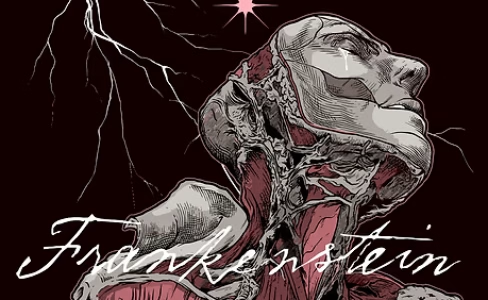
One of the more bizarre storylines in the final season involves Laszlo Cravensworth (Matt Berry) deciding to play mad scientist and create his own Frankenstein-style creature. With help from Colin Robinson (Mark Proksch), Laszlo stitches together body parts and brings a monster to life, somehow remaining completely unaware that he is basically recreating Frankenstein. The joke is made even funnier because Laszlo was alive when Mary Shelley’s novel was published, yet acts as if he has invented an entirely original concept.
Unlike Jerry, who spends most of the season complaining that the vampires never conquered the world, Cravensworth’s Monster is actually entertaining. He starts out as a confused stitched-together creature trying to understand the world around him, but gradually develops his own personality. The character ends up being surprisingly sympathetic and has more emotional depth than you would expect from a giant patchwork monster.
What makes the storyline work is that the joke isn’t really about Frankenstein’s Monster. The joke is Laszlo’s massive ego. Laszlo genuinely believes he is a scientific genius making groundbreaking discoveries, while everyone watching immediately realizes he is about two hundred years late to the party. It is peak Laszlo behavior.
The character also feels like a fun tribute to classic horror monsters. As someone who loves Frankenstein, I appreciated the references and the obvious inspiration from Mary Shelley’s work. The storyline is ridiculous, but in a season that introduces characters like Jerry, I found Cravensworth’s Monster far more memorable and entertaining. He may be stitched together from random body parts, but somehow he has more personality than some of the actual vampires introduced in the final season. 🧟♂️⚡
😂 The “Gizmo” Running Gag
One of my favorite running jokes in the entire show has got to be Laszlo Cravensworth (Matt Berry) constantly calling Guillermo (Harvey Guillén) “Gizmo.”
And the best part is that Laszlo never seems to realize he’s getting the guy’s name wrong.
This man has known Guillermo for years. Guillermo has cleaned up dead bodies for him, protected him, saved his life multiple times, and basically acted as the responsible adult in a house full of immortal idiots.
Yet Laszlo still walks into a room and goes:
“Ah yes, Gizmo.”
Every. Single. Time.
The joke never stops being funny because Matt Berry delivers it with complete confidence. He doesn’t say it like he’s making a joke. He says it like Gizmo is Guillermo’s actual legal name and everyone else is the weird one.
What’s even funnier is that Laszlo genuinely cares about Guillermo. He’ll help him through problems, give him advice, stand by him when things get rough, and then immediately forget his name again five seconds later.
It’s such a small joke, but it perfectly sums up Laszlo’s character. Deep down he’s loyal, surprisingly caring, and occasionally wise… but he’s also an absolute idiot when it comes to remembering basic details about the people around him.
By the end of the show, every time Laszlo said “Gizmo,” I was laughing before the joke had even finished because I knew exactly what was coming. It’s one of those simple running gags that somehow never gets old. 😆🧛♂️
For anyone who hasn’t seen the final season, Jerry (Mike O’Brien) is revealed to be an old vampire friend of Nandor (Kayvan Novak), Laszlo (Matt Berry), Nadja (Natasia Demetriou), and Colin Robinson (Mark Proksch). The joke is that the group accidentally put him into a deep sleep decades ago and completely forgot about him. When he wakes up, he’s horrified to discover they’ve spent years accomplishing absolutely nothing.
And that’s where my biggest problem starts.
The show suddenly asks us to believe:
> “Oh yeah, this guy was one of the group’s closest friends for decades.”
Meanwhile, six seasons went by without anyone mentioning him.
Not once.
Not in a story.
Not in a flashback.
Not in an offhand comment.
Nothing.
It’s one of those sitcom tricks where a character materializes out of thin air and the show says:
> “Trust us, they’ve always been here.”
And I always struggle with that trope.
The second issue is that Jerry isn’t particularly fun to watch compared to the main cast.
The core group works because they’re all disasters in different ways:
Nandor is clueless and lonely.
Laszlo is absurdly overconfident.
Nadja is chaotic and dramatic.
Colin Robinson is an energy vampire who weaponizes boredom.
Guillermo (Harvey Guillén) is the only semi-functional adult in the room.
Jerry’s role is mostly:
> “You people are idiots.”
And… yeah. They are.
But we’ve already had Guillermo doing that for six seasons.
The difference is Guillermo has emotional investment in the group. Jerry mostly comes across as judgmental, manipulative, and kind of a jerk.
The irony is that he’s often right. The vampires are lazy and incompetent. But being right doesn’t automatically make a character entertaining.
What makes What We Do in the Shadows work is watching a bunch of immortal morons stumble through modern life.
Jerry often feels like the guy standing off to the side saying:
> “You’re all stupid.”
Which isn’t nearly as funny as watching Laszlo accidentally break a city ordinance while explaining why he once owned a cursed hat.
I don’t think Jerry is terrible, but I do think he’s one of the least memorable major additions the show ever made. If you removed him entirely, most of the final season’s funniest moments would still work because they’re coming from the established cast.
🧛♂️ “We Must Blend In”
One of my favorite running jokes throughout What We Do in the Shadows is how the vampires constantly talk about staying hidden from humanity.
They’re always going on about how important it is to keep a low profile.
How they must not reveal themselves.
How they have to blend into modern society.
And then they’ll walk outside looking like they just came out of a 1971 Hot Topic.
🤣
Seriously.
Nandor is walking around in ancient robes and capes.
Laszlo looks like he wandered off the set of a gothic romance novel.
Nadja dresses like she’s attending a vampire royal gathering every single day.
And somehow all of them are convinced they’re blending in perfectly.
The funniest part is that nobody questions them.
Not because they’re doing a good job.
Because modern society has become so weird that people just assume they’re cosplayers, theater kids, goths, or people heading to some convention.
The vampires think they’re master infiltrators.
Meanwhile everyone else is looking at them like:
> “Huh. Weird outfit.”
And then continuing on with their day.
This joke reaches peak perfection with Laszlo’s Jackie Daytona disguise.
The man puts on a pair of jeans, changes his accent, sticks a toothpick in his mouth, and genuinely believes he has become an entirely different person.
And somehow it works.
That’s the beauty of the show’s humor.
The joke isn’t that the vampires are bad at blending in.
The joke is that they are so unbelievably bad at blending in that they’ve somehow looped back around into being successful.
The entire cast walks around dressed like Halloween decorations that gained sentience and yet somehow nobody ever suspects they’re vampires.
At a certain point you almost have to respect the confidence.
Because if Nandor can walk into a convenience store dressed like an ancient conqueror and think:
> “Yes. I look completely normal.”
Then maybe ignorance really is bliss. 🦇🤣
🩸 Pros
One of the biggest pros of What We Do in the Shadows is the cast chemistry. This show lives and dies by the cast, and thankfully the cast is absolutely perfect. Everyone feels like they are playing a completely different flavor of idiot, and somehow all those idiot flavors mix together beautifully. Nandor is needy ancient idiot. Laszlo is horny dramatic idiot. Nadja is violent theatrical idiot. Colin Robinson is boring office idiot. Guillermo is exhausted responsible idiot who slowly realizes he is surrounded by idiots.
The comedy timing is also fantastic. The mockumentary format gives the show so many opportunities for reaction shots, awkward pauses, zoom-ins, and characters casually explaining insane things to the camera like they are talking about grocery shopping. That format is a huge part of why the jokes land. The show knows when to let a line breathe. It knows when to cut away. It knows when a silent stare into the camera is funnier than another joke.
The production design is another major strength. The house is basically a character. It feels old, gross, creepy, and weirdly warm. It is the perfect setting for these characters because it looks like a gothic nightmare but functions like a terrible shared apartment. The show also does a great job making the supernatural world feel bigger without over-explaining it. Vampiric councils, werewolves, witches, ghosts, necromancers, familiars, night markets, vampire nightclubs, energy vampires, and all kinds of other supernatural weirdos show up, but the show rarely stops dead to explain everything like a fantasy textbook. It just throws you into the weirdness and expects you to keep up.
The emotional writing is also stronger than people might expect. This is a comedy, yes, but it actually has a lot going on underneath. Guillermo’s arc especially gives the show real weight. His desire to become a vampire is funny at first, but the longer it goes on, the sadder it becomes because you realize he has built his whole identity around wanting approval from someone who constantly takes him for granted.
And of course, Matt Berry. I’m sorry, but he deserves his own pro. Every time Laszlo opens his mouth, it feels like the writers handed him a normal sentence and he turned it into a cursed musical instrument.
Here’s several videos of montages of this show, enjoy the funny montages.
🤣 dammit I love lazlo, he’s extremely funny.
You wont remember a thing about it, and you my darling wont remember a thing about a damn thing. 🤣
The fact he says that to a baby is even more ridiculous.
🦇 Cons
The biggest issue with the show is that some later seasons do start to repeat emotional beats. Guillermo wants respect. Nandor ignores him or takes him for granted. Guillermo gets frustrated. Nandor maybe shows he cares a tiny bit, but then things reset. That dynamic is funny and important, but there are moments where you can feel the show circling the same drain for a while.
Season 4 is probably the most divisive season because the Baby Colin storyline is very weird. I personally think it has strong moments, especially with Laszlo, but I can completely understand someone finding it exhausting. It is one of those storylines where the show commits so hard to the bit that you either go along with it or you sit there like, “Okay, how long are we doing this?”
Some side plots in the later seasons also feel like detours. Funny detours, but still detours. The show is usually entertaining enough that it gets away with it, but not every storyline feels equally important.
The final season is good, but it does have that sitcom problem where ending the story is tricky because these characters are immortal disasters. You can’t suddenly make them grow too much because then they stop being funny, but you also don’t want the finale to feel like nothing happened. I think the show mostly handles that well, but there are definitely moments where you can feel the writers trying to figure out how much closure is too much closure.
🩸 Final Thoughts
What We Do in the Shadows is one of the best supernatural comedies ever made because it understands that the funniest version of vampires is not making them less powerful. It is making them powerful and still completely useless.
That is the genius of the show.
These characters are dangerous. They are killers. They are supernatural beings who could tear people apart. But emotionally? They are disasters. Total disasters. They are ancient monsters with roommate drama. They are immortal creatures who can’t handle rejection. They are gothic legends who act like petty coworkers.
And somehow, underneath all the stupidity, the show becomes weirdly sincere. Guillermo’s journey gives the series heart. Laszlo’s hidden tenderness gives it warmth. Nandor’s loneliness gives it sadness. Nadja’s ambition gives it energy. Colin Robinson gives it workplace trauma.
The show is gothic, stupid, bloody, horny, emotional, and hilarious.
And honestly, that combination should not work.
But it does.
🦇 Rating
9/10
What We Do in the Shadows is chaotic, hilarious, weirdly heartfelt, and one of the most consistently funny horror-comedy shows out there. It has some weaker stretches and repeated story beats, but the cast, writing, visual style, and character work are strong enough that even when the show stumbles, it still usually lands on something funny.
⚠️ Spoiler Warning
From here on out, we are getting into full spoilers for every season of What We Do in the Shadows. If you have not watched the show yet, turn into a bat and fly away now.
🩸 Season 1 Spoilers (2019)
Season 1 is basically the foundation season, and honestly it does a great job introducing just how pathetic these vampires are. The show starts with the idea that a documentary crew is filming these vampires in Staten Island, which immediately gives the whole thing this ridiculous grounded feeling. It’s not filmed like a glossy vampire epic. It is filmed like someone is documenting a group of supernatural idiots who somehow keep getting away with murder.
The main thing Season 1 establishes is that these vampires talk a big game but have accomplished almost nothing. Nandor, Laszlo, and Nadja are supposed to be these ancient creatures of darkness who were meant to help conquer the New World. But instead of conquering anything, they have spent years living in a crumbling house, arguing with each other, feeding on random people, and doing basically nothing. It is hilarious because The Baron shows up expecting progress, and the vampires are like, “Yes, absolutely, we are very powerful,” while having the energy of three people who forgot they had homework due.
The Baron is one of the biggest pieces of Season 1 because he represents the old vampire world coming to check on them. He is terrifying, ancient, powerful, and genuinely monstrous. So naturally, the main cast immediately turns his arrival into a complete disaster because that is what they do. The Baron wants them to conquer America, and the joke is that these idiots cannot even conquer Staten Island. They can barely manage a night out.
The nightclub episode with The Baron is one of the moments where the show really locks into its identity. You have this ancient vampire creature going out into modern nightlife, and instead of being this intimidating figure of darkness, he gets swept into the stupidity of modern partying. It’s funny, but it also shows how out of time these vampires are. They exist in the modern world, but they do not belong to it at all.
Then, of course, The Baron dies in the most stupid way possible. Not in a grand vampire battle. Not because some brave hunter defeated him. Not because of ancient prophecy. No. He gets exposed to sunlight because everyone is careless and incompetent. That is the show in one scene. This ancient monster survives centuries and then gets killed because these vampires are morons. You can’t make this stuff up. Actually, the writers did make this stuff up, and somehow it feels perfect.
But the biggest Season 1 twist is Guillermo discovering he is descended from Van Helsing. That twist is brilliant because it takes what could have been a simple familiar character and turns him into a walking contradiction. Guillermo wants to become a vampire more than anything, but his bloodline is literally built to kill them. That is comedy gold, but it is also great character writing. Guillermo spends all season acting like the least threatening person in the house, and then the show reveals that he is secretly the most dangerous person there.
That reveal gives the whole series a stronger engine. Guillermo is not just waiting to become a vampire. He is carrying this violent legacy he does not fully understand yet. And the funny part is that he is still sweet Guillermo. He is not some edgy vampire hunter wearing leather and brooding on rooftops. He is this polite, anxious little guy who can accidentally kill vampires because his body is basically screaming, “This is what we were made for.”
Season 1 ends with the show feeling like it found itself. It starts as a funny vampire mockumentary, but by the end, there is an actual character hook with Guillermo that makes you want to keep watching.
🦇 Season 2 Spoilers (2020)
Season 2 is where the show really levels up. Season 1 was funny, but Season 2 feels like the writers realized, “Oh wait, we can do literally anything with this world.” So this season expands the supernatural side while also pushing Guillermo’s vampire-hunter arc further.
The ghosts episode is one of the best examples of the show’s humor because it takes something that should be scary and turns it into emotional embarrassment. The vampires are haunted by ghosts, but instead of it being terrifying, it becomes this awkward confrontation with their past selves and unresolved feelings. That is such a smart use of supernatural comedy because the show is not just throwing monsters at the screen. It is using monsters and supernatural concepts to reveal how emotionally broken these characters are.
The witches episode is another great example of how absurd the world can get. The vampires dealing with witches could have been a basic supernatural rivalry plot, but because this is What We Do in the Shadows, it becomes weird, horny, stupid, and chaotic. The show constantly finds ways to take classic horror creatures and make their problems bizarrely mundane.
But the real meat of Season 2 is Guillermo. This is the season where his Van Helsing instincts become impossible to ignore. He keeps killing vampires, sometimes accidentally, sometimes because he has no choice, and the comedy comes from the fact that he is still trying to serve vampires while also being naturally good at murdering them. It’s like if a sheepdog realized it was secretly a wolf but still had to go to work every day and make coffee.
Guillermo’s relationship with Nandor becomes more complicated too. He still loves Nandor in his own way. He still wants Nandor’s approval. He still wants to become a vampire. But you can tell the resentment is growing. Nandor keeps promising him this future, but never actually gives it to him. And Guillermo keeps cleaning up messes, protecting everyone, hiding bodies, and sacrificing his own life while the vampires treat him like a living appliance.
The Season 2 finale is one of the best finales in the whole show. The Vampiric Council captures the main vampires and plans to execute them, and the whole thing feels like the characters have finally stumbled into consequences. They have spent the season surviving through stupidity, luck, and Guillermo’s secret protection, and now vampire society is ready to punish them.
Then Guillermo shows up and absolutely destroys everyone.
And this scene is incredible because it is funny, shocking, and genuinely cool. Guillermo goes full vampire hunter and wipes out a room full of vampires. The sweet familiar becomes an action hero for a few minutes, and it works because the show has been building to it all season. It is not random. It is the payoff to Guillermo slowly realizing what he is capable of.
The funniest part is that he does all of this to save the people who constantly disrespect him. That is Guillermo’s tragedy right there. He is brave, loyal, and powerful, but he keeps using that power to protect people who barely appreciate him.
By the end of Season 2, the house dynamic has changed forever. Guillermo is not just the familiar anymore. He is the reason they are alive.
🩸 Season 3 Spoilers (2021)
Season 3 is where the show gets more existential, which is a funny thing to say about a show where people regularly turn into bats and scream at each other, but it’s true. This season deals more with immortality, purpose, and the weird emptiness of living forever.
After Guillermo’s big vampire-slaying moment, the vampires do not really know what to do with him. They should probably be afraid of him, but they also need him. And because this show’s vampires are idiots, instead of making a logical decision, they just continue living in the world’s most dysfunctional supernatural household.
The Vampiric Council storyline is funny because the vampires get promoted into positions of power despite being wildly unqualified. Which honestly feels very realistic. Vampire society apparently works like human society: the wrong people get leadership roles and everyone else suffers. Nandor and Nadja trying to handle power is hilarious because Nadja actually wants authority, while Nandor mostly wants to feel important.
Nandor’s existential crisis is one of the strongest parts of the season. He starts realizing that after centuries of being alive, he is still not happy. He has power, immortality, and history, but he does not have fulfillment. That is a surprisingly sad idea under all the comedy. Nandor has spent centuries being “Nandor the Relentless,” but who is he when there is nothing left to conquer? He is lonely. He wants love. He wants meaning. He wants something, but he does not know how to find it because emotionally he has the maturity of a haunted spoon.
Laszlo and Nadja continue being chaotic, but Season 3 also starts making Laszlo more layered. He is still ridiculous and inappropriate, but you start seeing more clearly that he actually cares about the people around him. He just expresses it in the most Laszlo way possible, which usually means saying something insane and then pretending he has no feelings.
Colin Robinson’s storyline becomes the weirdest part of the season because the show starts building mystery around energy vampires. Colin is approaching his 100th birthday, and nobody knows what that means. At first, it feels like another weird Colin bit. But then the show actually turns it into something important.
And then Colin dies.
Or at least, that is what it looks like.
His death is weirdly sad because Colin Robinson, despite being annoying by design, is part of the group. He is a soul-draining nightmare, yes, but he is their soul-draining nightmare. Watching the characters react to him dying adds a strange emotional punch to a character whose entire joke is making people bored.
Then the show goes full What We Do in the Shadows and has a baby version of Colin Robinson crawl out of his corpse.
Just typing that feels insane.
But it works. It is gross, funny, disturbing, and somehow emotionally meaningful. The reveal that energy vampires have this bizarre lifecycle is one of the strangest mythology additions in the show, and it sets up Season 4 in a huge way.
The finale also has the characters preparing to go in different directions. Nadja gets an opportunity in England. Nandor wants to travel. Guillermo gets dragged into another round of being used and emotionally yanked around. But Laszlo secretly stays behind to raise Baby Colin, and that is such a good character choice. Laszlo, of all people, becomes the responsible one in this situation. Not fully responsible, because let’s not get crazy here. But responsible by Laszlo standards, which means the bar is somewhere under the basement.
Season 3 ends with the show becoming more emotionally complicated. The characters are still idiots, but now their loneliness feels more obvious.
🦇 Season 4 Spoilers (2022)
Season 4 is probably the weirdest season because of the Baby Colin storyline. This is the season where the show basically says, “Yes, we are really doing this,” and you either accept it or you don’t.
Baby Colin is one of those ideas that sounds absolutely unbearable on paper. A baby version of Colin Robinson growing rapidly while Laszlo raises him? That could have been awful. And sometimes, yes, it is a lot. But the reason it mostly works is because of Laszlo.
Laszlo raising Baby Colin becomes one of the strangest emotional arcs in the series. This man is usually a walking tornado of filth and arrogance, but he genuinely tries with Baby Colin. He studies him. He guides him. He becomes attached. And because it is Laszlo, he does all of this in the weirdest, least normal way possible.
The tragedy of this storyline is that Laszlo knows, deep down, that Baby Colin may not stay this way forever. There is something temporary about it. He is raising this creature who came from Colin Robinson’s corpse, and the whole thing feels like parenting through a haunted biology experiment. But Laszlo still cares. And that matters.
Meanwhile, Nadja opens her vampire nightclub, and that storyline is pure chaos. The idea of Nadja running a nightclub makes perfect sense because she is dramatic, power-hungry, social, and completely convinced she knows what she is doing. But of course, because this show cannot let anyone be competent for too long, the nightclub becomes a disaster. It gives the season a fun new location and lets the show explore supernatural nightlife, which is exactly as messy as you would expect.
Nandor’s storyline with the Djinn and Marwa is one of the more uncomfortable but interesting arcs. Nandor gets wishes and uses them in ways that reveal how selfish he can be. He resurrects Marwa, one of his old wives, and then keeps changing things about her through wishes to make her more agreeable or more suited to what he wants. And yes, it is funny because the show plays it with absurdity, but it also shows that Nandor’s idea of love is extremely broken. He wants companionship, but he does not really understand another person’s autonomy. He wants the perfect partner, but instead of building a relationship, he tries to magically edit a person into being what he wants.
That is dark when you actually think about it.
Guillermo’s frustration keeps building throughout Season 4. At this point, the man has done everything. He has protected the vampires, killed for them, cleaned for them, lied for them, saved their lives, and still Nandor will not turn him. It is honestly maddening. Guillermo’s dream has become less of a dream and more of a carrot being dangled in front of him forever.
And that is why the ending lands.
Guillermo finally decides he is done waiting. He goes to Derek and asks Derek to turn him into a vampire.
That moment is huge because Guillermo finally makes a choice for himself. He stops letting Nandor control the timing of his future. He stops waiting for permission. He wants vampirism, and if Nandor won’t give it to him, someone else will.
It is exciting, but it also feels like a mistake. Not because Guillermo is wrong to be frustrated, but because you can tell this is coming from years of pain and desperation. He is not calmly making a healthy life decision. He is basically saying, “Fine, I’ll do it myself,” while standing on a mountain of emotional neglect.
And then, because this is this show, that choice becomes next season’s disaster.
🩸 Season 5 Spoilers (2023)
Season 5 is one of the most important seasons because it finally pays off the question the show has been teasing since the beginning: what happens when Guillermo becomes a vampire?
And the answer is: it goes badly. Very badly. In classic Guillermo fashion, even achieving his dream comes with a giant supernatural asterisk.
Guillermo has been turned by Derek, but the transformation does not work properly. He gets some vampire traits, but he does not fully become one. He is stuck in this awkward in-between state, which is funny but also thematically perfect. Guillermo has spent the entire show stuck between worlds. He is not fully human in the normal sense because he lives with vampires and kills monsters. But he is not fully vampire either. He is always in-between, always waiting, always not quite what he wants to be.
Laszlo figuring out Guillermo’s condition gives the season a lot of great comedy because Laszlo goes full mad scientist. He starts studying Guillermo, experimenting, testing, poking around, and generally treating him like a supernatural science project. Which is horrible, but also Laszlo helping in the only way Laszlo knows how: through deeply concerning methods.
The reveal that Guillermo’s Van Helsing blood is interfering with the transformation is great because it brings his whole arc full circle. The thing that makes Guillermo special is also the thing preventing him from becoming what he thought he wanted. His hunter blood rejects vampirism. His body is basically saying, “Absolutely not, bestie. We kill these things.”
That is hilarious, but also sad.
Because Guillermo wanted vampirism to fix something inside him. He thought becoming a vampire would make him powerful, respected, loved, and complete. But once he starts transforming, he realizes the reality is not what he imagined. He struggles with killing humans. He struggles with what being a vampire actually means. He wanted the fantasy, not the cost.
That is honestly one of the smartest choices the show makes. It would have been easy to just turn Guillermo into a vampire permanently and let him become part of the gang. But the show does something more interesting. It asks whether Guillermo ever truly wanted to be a vampire, or whether he wanted what vampirism represented to him.
Power. Respect. Belonging. Nandor’s approval. A place in the family.
And that is different.
Nandor’s reaction is also a major part of the season. He is furious when he finds out Guillermo let Derek turn him. On the surface, it is about vampire tradition and betrayal. But emotionally, it is clearly deeper than that. Nandor feels hurt. He may be selfish, immature, and terrible at expressing anything honestly, but Guillermo matters to him. Guillermo choosing someone else wounds Nandor’s pride, but it also wounds him emotionally.
Of course, because Nandor is Nandor, he processes this like an ancient idiot.
The season builds toward Guillermo realizing he does not want to live as a vampire. He cannot kill humans. He cannot fully become the monster he thought he wanted to be. And instead of that being a failure, it becomes growth. Guillermo finally starts to understand himself.
Then comes the Derek situation.
Nandor reverses Guillermo’s transformation by killing Derek, which is such a weirdly dark solution. Derek gets turned human and then dies, and the show plays it with that perfect What We Do in the Shadows tone where something horrifying is also absurdly casual.
It is sad, funny, messed up, and weirdly touching all at once.
By the end of Season 5, Guillermo is human again, but he is not the same Guillermo from Season 1. He has actually tested the dream. He got close enough to see what it really was, and he realized it was not what he needed.
That is huge.
🦇 Season 6 Spoilers (2024)
Season 6 is the final season, and honestly the biggest challenge is figuring out how you end a show about immortal characters who are supposed to keep being ridiculous forever.
You cannot give these vampires a normal sitcom ending. You cannot suddenly make Nandor emotionally mature, Laszlo responsible, Nadja calm, and Colin Robinson considerate. That would be fake. That would be wrong. That would be garlic-level offensive.
So the final season smartly focuses more on Guillermo’s identity after he lets go of the vampire dream.
That is the emotional endgame of the show. Guillermo spent years thinking his story was about becoming a vampire. But it was never really about that. It was about him learning he mattered without becoming one. He did not need fangs to have worth. He did not need Nandor’s approval to be important. He did not need immortality to belong.
That is a surprisingly mature emotional conclusion for a show where people regularly shout “BAT!” and fly away.
The vampires themselves remain mostly themselves, and I actually think that is the right call. Nandor is still emotionally confused. Laszlo is still Laszlo. Nadja is still dramatic and intense. Colin Robinson is still a walking human meeting that should have been an email. They are immortal. They are stuck in their patterns. That is part of the joke, but it is also part of the sadness.
The documentary format becomes more meaningful in the final season too. For the entire show, the camera crew has been following these supernatural idiots around, capturing their chaos. By the end, the idea that the documentary is ending gives the show a bittersweet feeling. The audience is leaving them, but they are not ending. Their lives continue. The house continues. The stupidity continues. Staten Island remains in danger.
And honestly, that is the perfect ending for this show.
Because What We Do in the Shadows was never building toward some giant vampire war or final boss fight. It was never about saving the world. It was about living with these ridiculous monsters long enough to realize they are not just monsters. They are lonely, selfish, funny, stupid, sometimes sweet, sometimes awful, emotionally broken creatures who will probably keep causing property damage until the sun explodes.
Guillermo’s ending works because he is the one who actually changes. The vampires stay immortal disasters, but Guillermo escapes the emotional trap he was stuck in. He may still care about them. He may still be connected to them. But he is no longer defined only by serving them or wanting what they have.
That is why the ending works.
The camera leaves.
The vampires remain idiots.
Guillermo has grown.
And somewhere, somehow, Laszlo is absolutely saying something that should get him banned from public spaces.
What a show.
One the things I love about this final episode is how realistic it is, most shows would be like we’re all done for because show is ending, instead the show treats it as, yeah documentaries end all the time, but our lives still go on.
That right there is great in my opinion.
