Dying Light: The Beast (2025)
—
🎥 Let’s start by showing y’all the trailers, shall we?
Before we even get into the guts and gore, here’s a rewind of the trailers and teasers that blindsided us. Because Dying Light: The Beast wasn’t just “announced,” it pretty much materialized out of nowhere.
We were barely out of Dying Light 2 (2022) when this thing dropped in 2025. Normally a “third” zombie installment feels like a cash grab or a studio trying to milk the corpse — but no, somehow Techland dropped what might actually be the best game in the series. This shouldn’t exist, yet it does. And I’m glad it does.
🩸 Quick Refresher: The Following DLC
Before we dive into The Beast, let’s rewind a bit. The base game of Dying Light ended with Crane nuking Harran… and the virus still spreading. Not exactly a clean win. Techland followed it up with a massive expansion, The Following, which dropped us into the countryside outside the city and introduced a doomsday cult worshipping a mysterious figure known only as “the Mother.”
Crane investigated, and things got weird fast. The cult claimed they’d found “salvation” through her, handing out a strange elixir that supposedly kept them safe from the infection. The truth? The Mother was infected herself — but she wasn’t like other zombies. She was a sentient Volatile, her body mutated but her mind fully intact. She’d been buying time, waiting for someone strong enough (like Crane) to carry on her grim legacy.
The story culminated in an awful choice:
1. Drink the elixir — knowingly inject yourself with a concentrated strain of the virus and become a sentient infected like the Mother.
2. Refuse and fight her — kill the Mother, stop the cult, but know the infection is in you and spreading fast.
Neither path offered a happy ending. The canonical route had Crane rejecting the cult, fighting the Mother, and walking away victorious… but doomed. In the final moments, his body convulsed, his eyes glowed orange, and he fully transformed into a Volatile. Except this time, he was aware of it. Sentient. A monster who still remembered being human.
That’s the exact nightmare Dying Light: The Beast picks up from. The GRE swooped in, captured this “aware Volatile” Crane, and spent 13 years running experiments on him. What’s left is the hybrid man-beast we now play — half survivor, half nightmare, all trauma.
—
🔄 Non-Spoiler Plot Overview
This game rewinds things back to the roots of the first game — survival horror, suffocating tension, and that gnawing loneliness of being stuck in a hostile place with only scraps of trust around you.
You step back into the torn-up shoes of Kyle Crane (yes, he’s back). Thirteen years after the events of The Following, Crane is scarred, altered, and haunted — both literally and figuratively. He’s escaped years of torture and experimentation at the hands of the Baron, a sadistic villain using the GRE’s leftovers to build an army of genetic abominations.
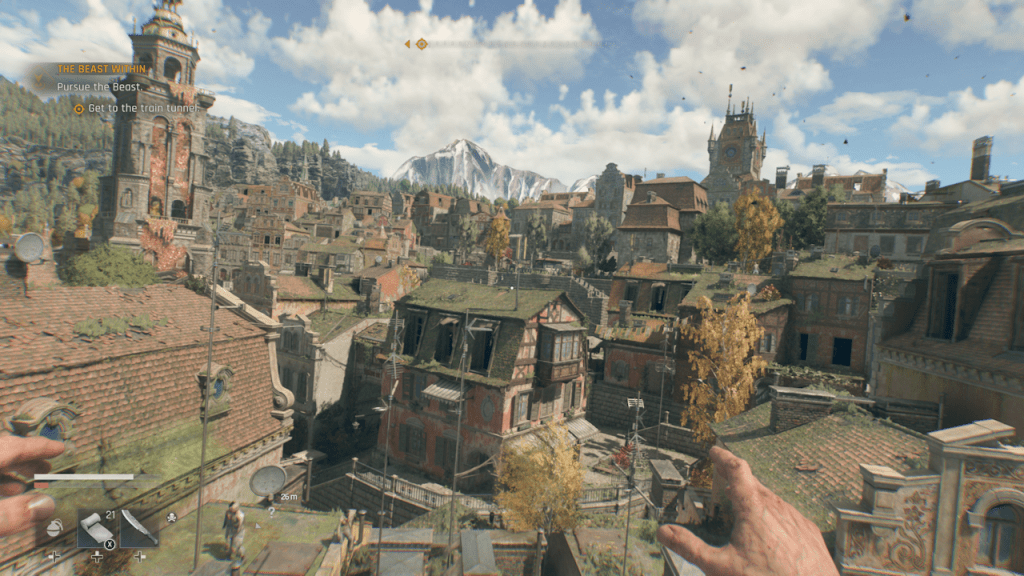
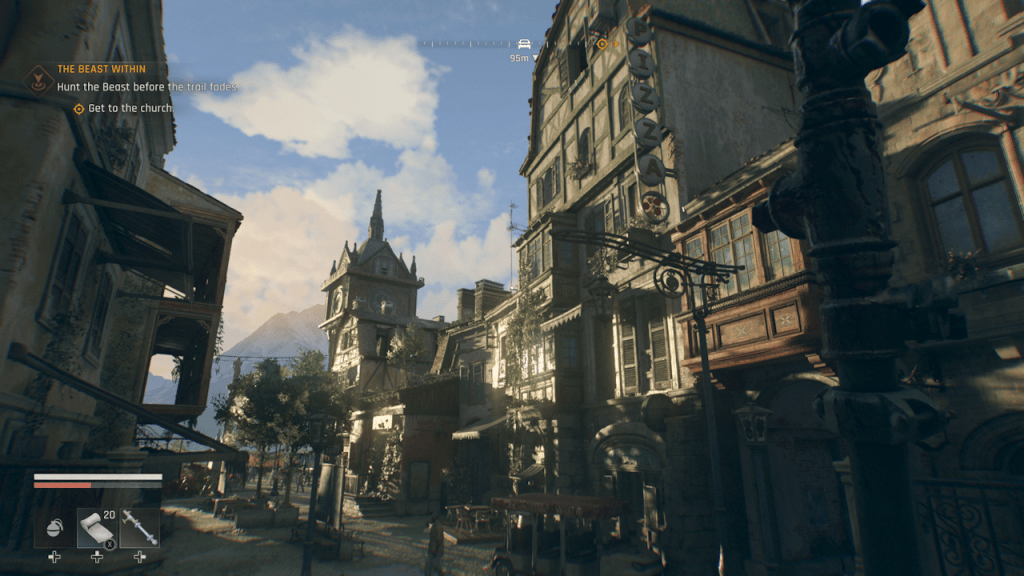
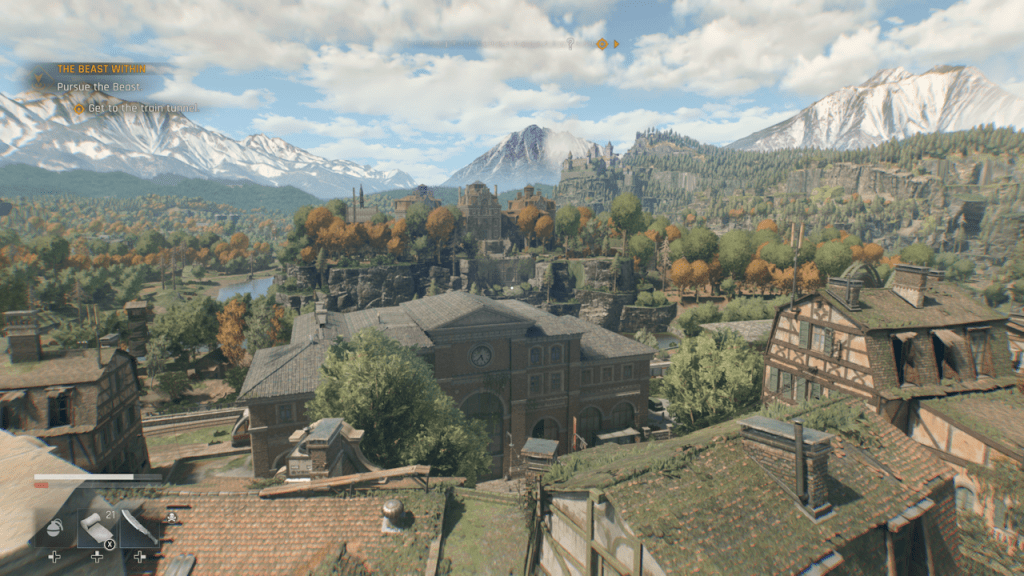
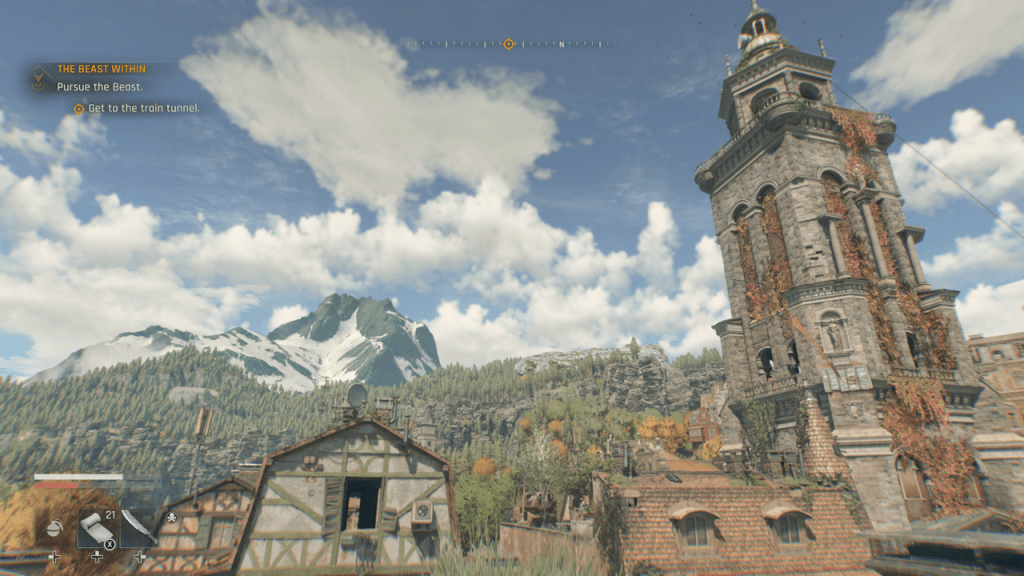
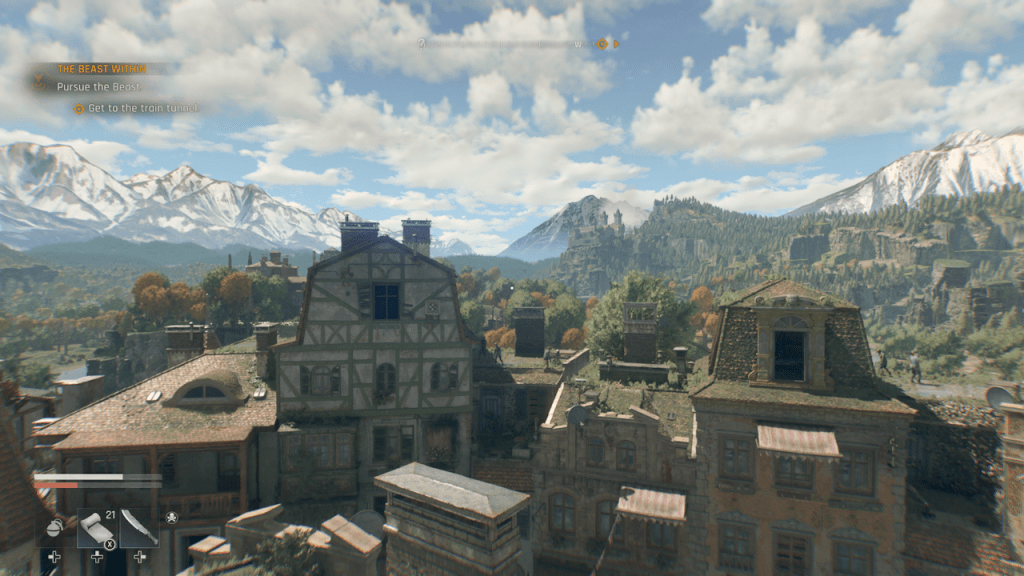
Now Crane is loose in Castor Woods — a gothic alpine town that looks like it was pulled straight off a Swiss tourism postcard and then smeared in blood. Here, he has one mission: revenge. To pull it off, he hunts down mutated “Chimeras,” allies with scattered survivor groups, and learns to master his unstable new “Beast” powers.
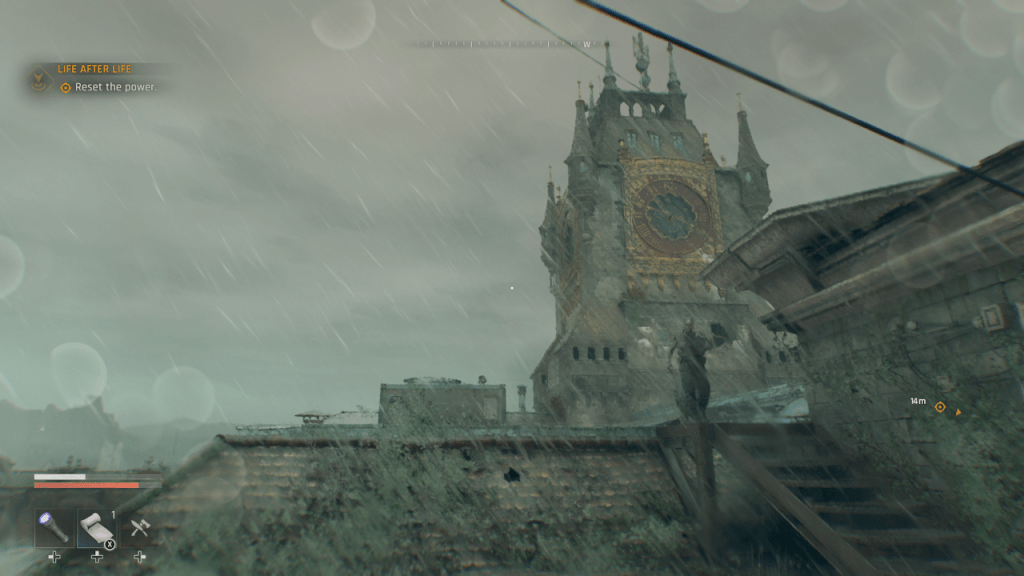
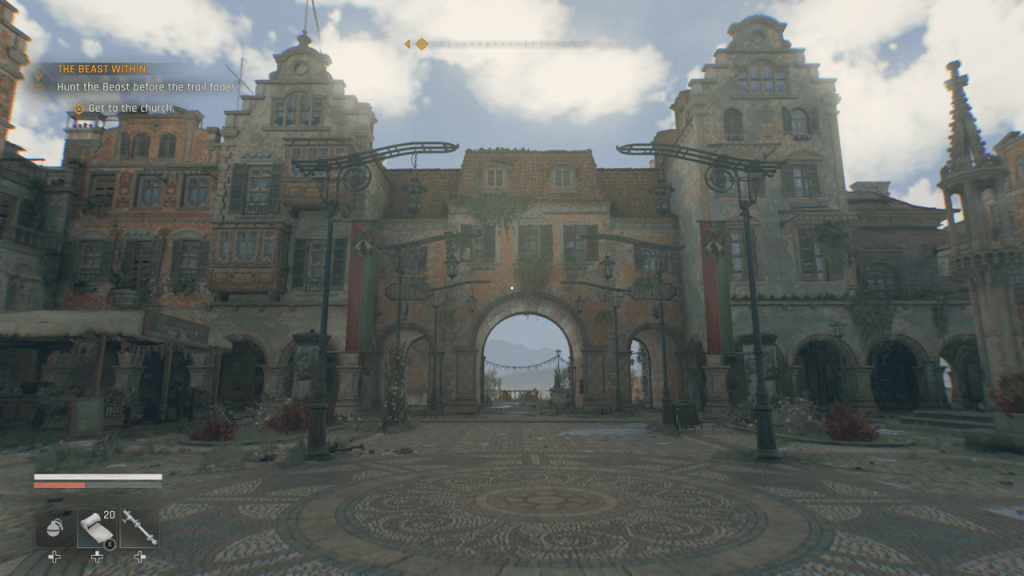
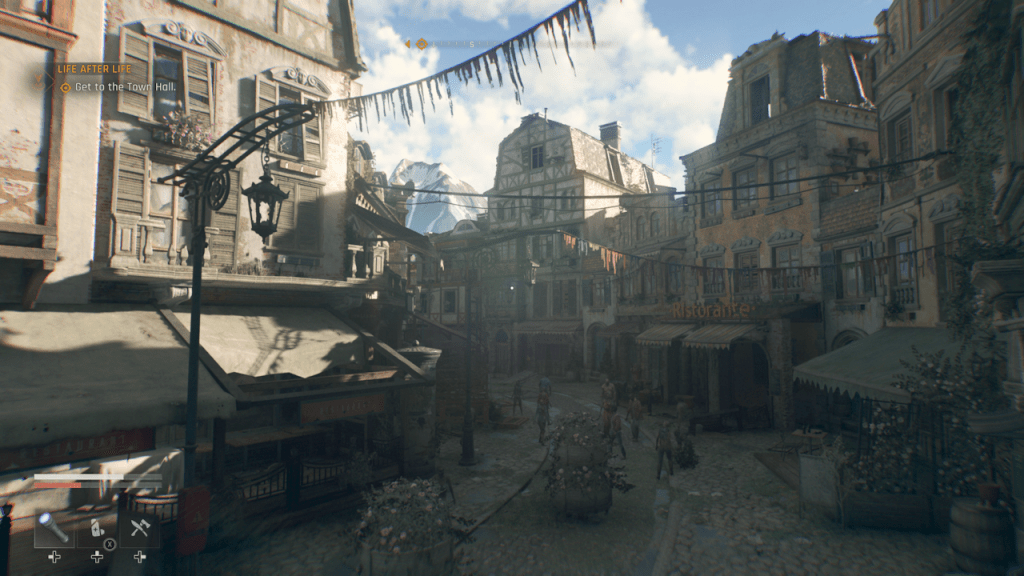
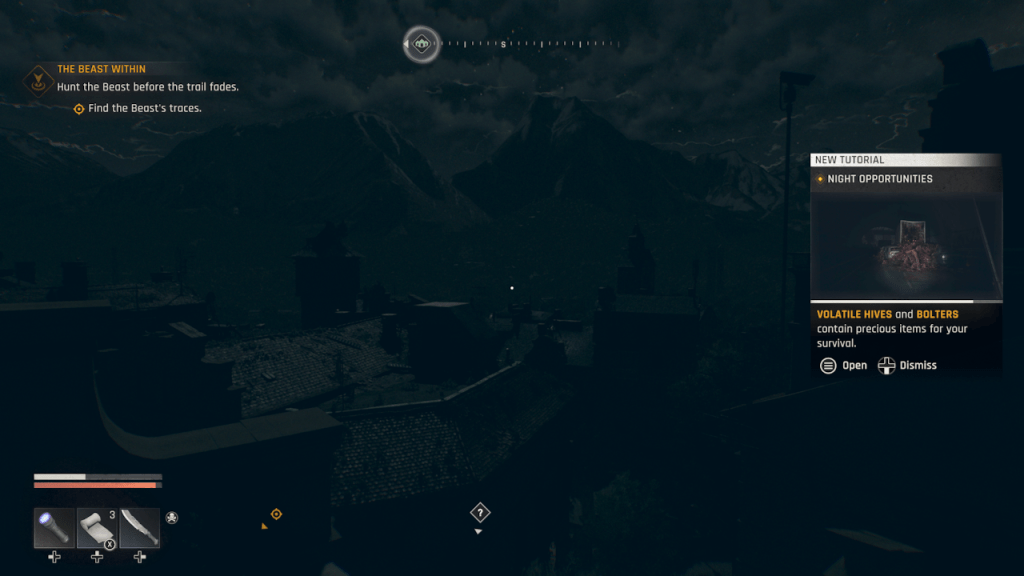
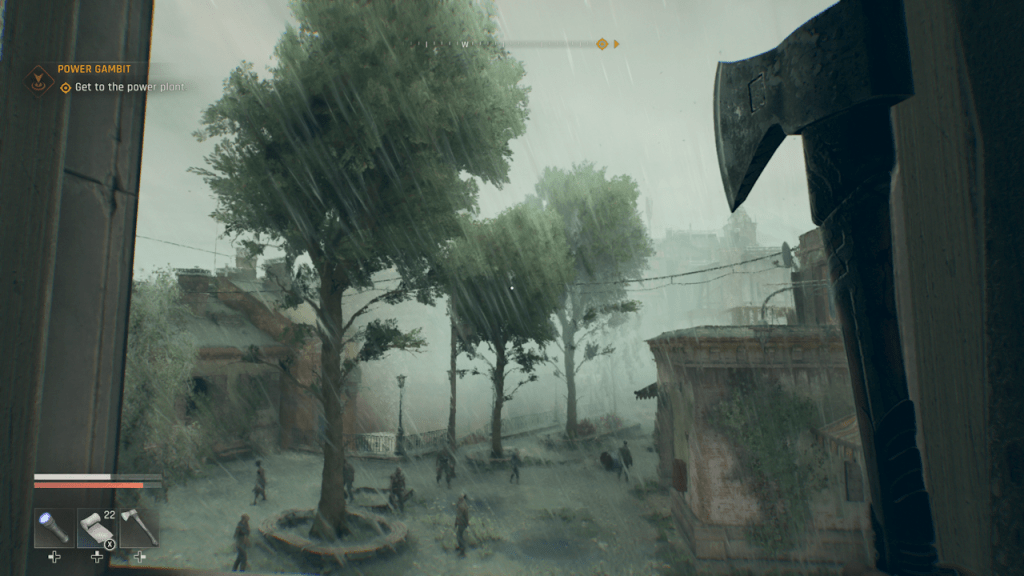
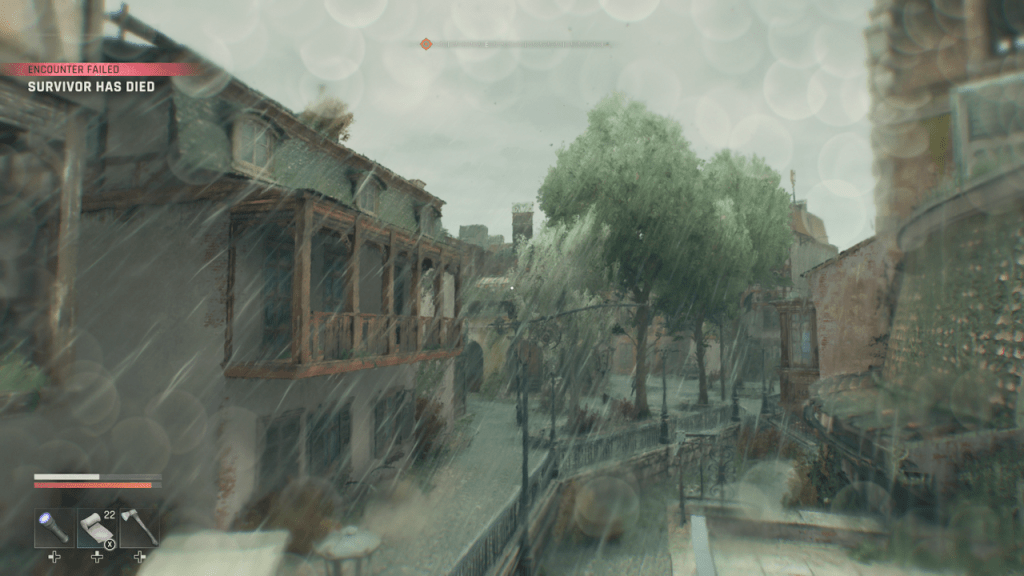
It’s a smaller-scale plot compared to Dying Light 2’s messy faction drama, but that’s exactly why it works. It’s tighter, scarier, and way more personal. From mt screen shots look how gorgeous this game is.



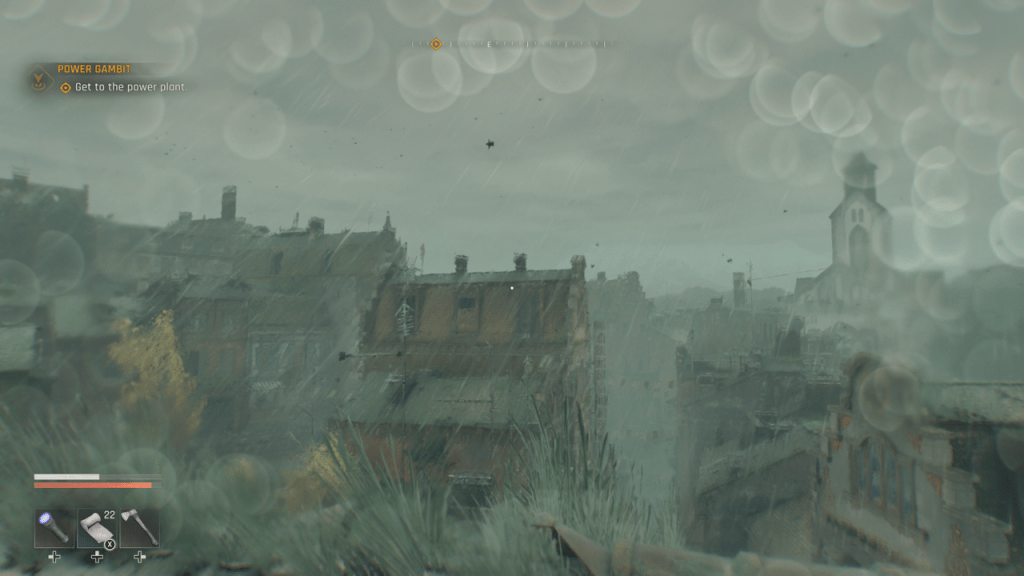
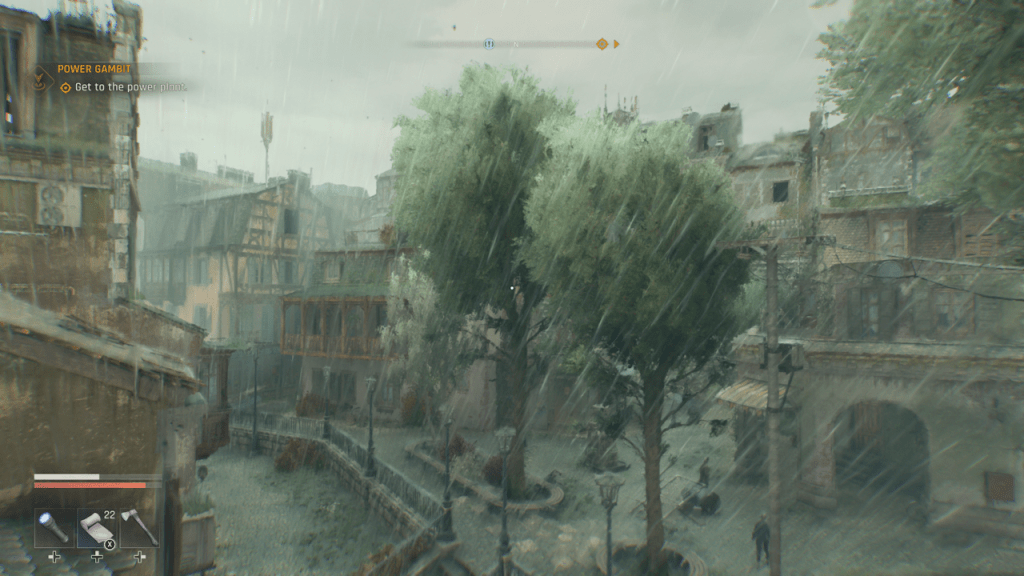
🎮 Rant Box: NPCs Are Useless
Here’s something that hit me while replaying this: NPCs in zombie games (and RPGs in general) are toxically inept. Like, how the hell did these people survive this long?
Everyone in Harran has somehow lasted through the apocalypse, right? They’ve got barricades, bases, weapons, supplies. They’re resourceful enough to hold out for months. And yet, the second you walk into town, suddenly everyone’s helpless.
“Crane, can you climb that death-trap radio tower for us?”
“Runner, could you risk your life to grab me a pack of cigarettes from a zombie-infested building?”
“Oh, hey stranger, can you hand-deliver this love letter across the city while virals try to eat your face?”
Bruh. You’ve lived this long. You’ve clearly been scavenging, hiding, barricading, maybe even fighting zombies… but now, suddenly, you’re allergic to leaving your safe zone? Like, are you all secretly made of glass? Do you have arthritis?
It makes me want to look every sidequest-giver dead in the eyes and say:
👉 “If you can’t do a single thing for yourself, how the hell did you make it this far?”
This isn’t just a Dying Light problem, by the way. It’s every RPG. The second you roll into town, it’s like the NPCs form a line to hand you their grocery lists. The immersion just cracks when the supposed “survivors” of the apocalypse can’t even fetch their own flashlight without calling you the chosen errand boy.
—
👥 Character Rundown
Kyle Crane (Roger Craig Smith) – Scarred, older, volatile (literally). Less the cocky free-runner of the first game, more the haunted antihero who knows exactly how much he’s lost.
Olivia – The scientist who frees Crane. Starts as an ally, later reveals complicated motives.
The Baron – Villain, mad scientist, sadist. A character you love to hate.
The Sheriff – Survivor leader who betrays Crane, regrets it, and redeems herself in battle.
Lydia – Leader of exiled infected, experiments with controlling lesser zombies. (Creepy but cool.)
Spike – Yes, Crane’s old friend. Heartbreak warning: don’t get too attached.
Aiden Caldwell (Jonah Scott) – Protagonist of Dying Light 2, folded into this story in a way that’s both surprising and tragic.
Tone of the game:
I’m surprised to say this but this game leans more towards horror then the previous 2, yeah I know shocker because the first game was horror based, but hear me out. Nifht time in this game is more pitch black since theres no street lights on, Volatiles are back, the new zombies in this game look horrifying, even more zombies then in the first game can now climb up sides of walls or down walls. And oh yeah 8 times out of 10 ur gonns be in the forest in this game, the forst! At night! With nowhere to climb up on.
Personal Note – Why the Setting Hit Different
One of the biggest reasons The Beast worked for me is the alpine village setting. It reminded me so much of my childhood trips to Lake Tahoe, specifically those alpine-style towns tucked up in the mountains. I can still picture the wooden balconies, the cobblestone paths, and the backdrop of snow-dusted peaks. By day, those places always felt cozy, almost magical. But The Beast flips that familiarity on its head — it turns that same comforting vibe into something tense and eerie. Walking through the game’s frozen streets, I couldn’t help but feel like I was back in Tahoe as a kid, except now the shadows stretched longer, the silence hit heavier, and danger lurked just around the corner. That’s the beauty of the setting: it plays off a real-world sense of nostalgia, then distorts it into a nightmare.
—
🕑 Pacing / Episode Flow
The game feels like a 20-hour tight campaign. You’re not overwhelmed with filler icons like in Dying Light 2. Instead, every step you take through Castor Woods feels deliberate.
Daytime: manageable scavenging, parkour playgrounds, eerie stillness.
Nighttime: pure horror. Volatiles stalk the woods, and the darkness is suffocating again. (Dying Light 2 made night feel like dusk with training wheels — The Beast makes it terrifying.)
Side quests: grounded and tied to survival, not faction busywork. You’ll help survivors reinforce a church, hunt unique Chimeras, and raid convoys. Even when optional, they feel purposeful.
—
✅ Pros
Brutal, weighty combat (limbs fly, blood pools).
Beast Mode mechanic adds tension without becoming overpowered.
Castor Woods is gorgeous and terrifying — a perfect hybrid of fairy-tale village and gothic nightmare.
Back-to-basics survival horror atmosphere.
Streamlined open world — no bloat, just meaningful content.
Co-op keeps the chaos fun.
A welcome return of Kyle Crane, with his best arc yet.
Slight spoiler, but after the main campaign is done. Just like the first game, there is free roam in this game. You can play to your heart’s contempt.
Pro – Humanity in the Horror
One detail I found unexpectedly effective is how the game handles the fast zombies. Normally, these guys are just feral, sprinting at you with pure rage. But if you fight back and kick them, they slip for a moment into something eerily human. They’ll beg you to stop, cry out for help, or plead for mercy before snapping right back into full-on predator mode. It’s a tiny mechanic, but it adds a lot of weight. Suddenly, these aren’t just “video game enemies” — they feel like people trapped in their own infected bodies, flickering in and out of humanity. It makes every encounter way more disturbing, and it reminds you that this world isn’t just about monsters; it’s about what used to be human
—
❌ Cons
Story dips into B-movie territory sometimes (some twists are predictable). But then again thats neither here noe there.
The Baron’s final form screams “boss fight checklist.”
Guns exist, but melee still overshadows them — so why bother?
Full CGI Thing… oh wait, wrong review 😅. Point is, not every design choice lands.
Helpful advice:
I recommend when y’all first get a point to use to upgrade ur skill tree, to purchase the ability to drop kick, yes unfortunately its locked behind skill tree unlock, aksi this game has another point system where u unlock a point to upgrade the beast skill tree, id recommend purchasing the ability to decide when to use beast mode, otherwise it happens randomly, after u kill enough zombies for the meter to refill.
—
😐 Final Thoughts
I didn’t think I’d say this, but Dying Light: The Beast might actually be my favorite in the series. It captures the fear of the first game, trims the bloated fat of the second, and somehow makes Crane’s return both shocking and earned.
The setting of Castor Woods deserves special praise. This alpine village is a character in itself — cobblestone plazas, neon signs still flickering, rain-slick rooftops, statues smeared with blood. By day, you feel like you’re walking through a decayed postcard; by night, you feel hunted. It’s atmospheric horror done right.
This is Techland surprising us with a third entry that not only works, but feels essential.
—
⭐ Rating: 10/10
—
⚠️ Spoiler Warning
Y’all know the drill. Past this point, it’s gore, betrayals, and boss fights galore. Proceed at your own risk.
💥 Spoilers Ahead
Alright, strap in — because Dying Light: The Beast doesn’t pull punches.
—
🧪 The Escape
The game opens with Kyle Crane in captivity — tortured and experimented on for 13 years by the Baron, a sadist who’s basically Dr. Frankenstein if Frankenstein had a military budget. Crane’s DNA is spliced with volatile strains, leaving him half-man, half-zombie. (Congrats, Crane, you’re your own worst nightmare.)
He breaks out thanks to a scientist named Olivia. At first she’s all “I hate the Baron, let’s team up” — and yeah, you know where this is going. But for now, she helps him flee the lab into Castor Woods, the haunted alpine town that becomes the stage for everything.
—
🤝 Allies and Double-Crosses
Crane meets survivors holed up in the Town Hall, led by a woman called the Sheriff. Within 30ish minutes, she sells him out to the Baron. Thanks, Sheriff. Top-tier leadership there.
Crane survives, obviously, and the Sheriff slinks away in guilt. He then links up with Lydia, leader of exiled infected who escaped the Baron’s lab. Lydia’s whole deal? She’s experimenting with telepathy to control lesser zombies. Creepy, but hey, useful.
Together, they capture a scientist named Camilo, who agrees to help if it means screwing over the Baron. Meanwhile, Olivia drops another plot bomb: her father’s been imprisoned by the Baron, which gives her personal skin in the game.
The Baron retaliates by sending Chimeras (his lab’s nightmare boss fights) to attack the Town Hall. It’s chaos. The Sheriff redeems herself, Lydia brain-jacks a Chimera to turn it against its master, and Crane realizes they actually stand a chance if they unite.
—
🧟 The Beast Reveal
Crane finally tracks down the mysterious “Beast” that’s been terrorizing the Baron’s troops. Plot twist: it’s Aiden Caldwell (yep, the protagonist of Dying Light 2). He’s been fighting the Baron with Spike at his side.
Just as the reunion should’ve been good news, the Baron calls and pulls a power move: he’s captured Olivia and Spike. His terms? Hand over Aiden.
Aiden nobly surrenders himself to save Spike. The Baron — surprise surprise — breaks the deal and demands Crane too. Villains really gotta stop overplaying their hand like this.
—
🔪 Betrayals on Betrayals
Crane and allies storm the Baron’s stronghold. But Olivia flips sides and betrays them (again: betrayal is the new handshake in this franchise). Everyone’s captured. Spike? Executed on the spot. Camilo? Also dead. Brutal, cruel, and gutting.
But then Olivia double-crosses the Baron too. Turns out she was only ever using him to free her father. She cuts Crane loose, and all hell breaks loose.
—
👹 The Baron’s Final Form
Cornered on his helipad, the Baron injects himself with his perfected virus strain, becoming the “ultimate Chimera.” Think Nemesis from Resident Evil but with even more bad attitude.
The boss fight is pure chaos: roars, swipes, a hulking monster throwing you around. But Crane finishes it with poetic justice — impaling the Baron’s heart on a steel pipe. The lab’s fires rage, and the nightmare ends with a crunch.
—
📞 The GRE’s “Thank You” Call
Enter the GRE Director, cool as you like, calling Crane after the dust settles:
“Hey, thanks for killing our rogue psychopath. He was becoming a liability. Want your freedom as a reward?”
Crane, being Crane, basically tells her to shove it. He’s not cutting deals with the same monsters who experimented on him for over a decade. Instead, he and his allies swear to take the fight to the GRE.
Cue ominous setup for future entries.
—
🦍 Key Gameplay Twists in the Story
Every Chimera you hunt down is a boss fight that juices up Crane’s “Beast Mode.” You literally grow stronger by injecting their mutated blood into yourself. (Gross? Yes. Effective? Also yes.)
The Beast Mode mechanic ties directly into story moments — like barely surviving an ambush by unleashing volatile strength in a cutscene.
Side characters like Lydia and the Sheriff actually matter in the climactic battles. It’s not just “side quest filler.” Their alliances (and betrayals) shape the ending.
—
🔚 Ending Vibe
When the credits roll, it’s not triumphant — it’s bitter. Crane survives, but Spike is gone, Aiden’s fate is bleak, Olivia’s loyalty is questionable, and the GRE is still out there pulling the strings.
It’s less “the end” and more “to be continued” — with the GRE positioned as the ultimate enemy now.
—
That’s the spoiler section — brutal, bleak, and definitely more in line with the horror tone you wanted.

 Judicious Jarrod's Every-Flavor Entertainment and Media Reviews